

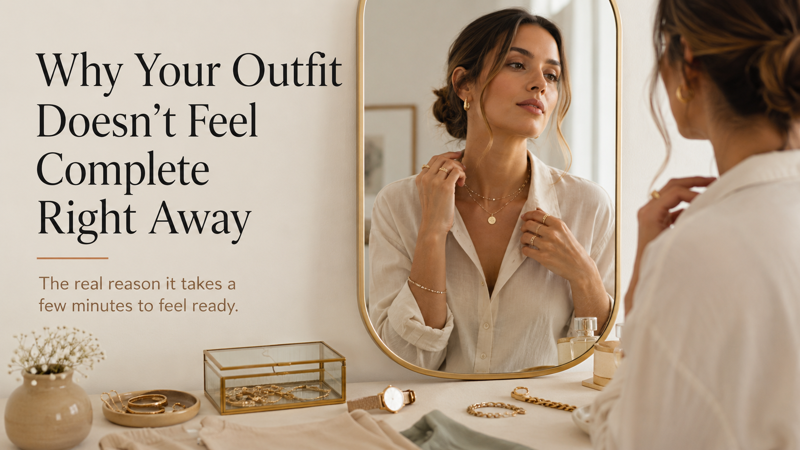
Have you ever finished getting dressed, looked in the mirror, and thought, “Everything looks good, so why doesn’t it feel finished yet?”
You’re not alone.
Many people experience a strange delay between looking ready and actually feeling ready. Your outfit is on. Your jewelry is in place. Your hair is done. Yet something still feels slightly unsettled.
The good news? There is nothing wrong with your outfit choices.
What you’re experiencing is a completely normal part of how the brain adjusts to change.
Let’s explore why this happens and what it reveals about the way we get dressed every day.
The Hidden Gap Between Looking Ready and Feeling Ready
Most people assume that getting ready ends the moment they put on the final accessory.
In reality, that’s only the physical part of the process.
Mentally, your brain is still working.
Throughout your morning routine, you’re making dozens of small decisions:
- Which outfit should I wear?
- Do these earrings match?
- Should I add a bracelet?
- Is this necklace too much?
- Does everything feel balanced?
Even though these choices seem small, they require attention and mental energy.
When the decisions stop, your brain doesn’t instantly stop processing them. It needs a little time to catch up.
That’s why your appearance may look complete before it actually feels complete.
Why Your Brain Keeps Checking Everything
After getting dressed, many people continue doing little “checks.”
You might:
- Look in the mirror one more time.
- Adjust a ring.
- Touch a necklace.
- Check your watch.
- Notice how a bracelet sits on your wrist.
This doesn’t necessarily mean you’re unhappy with your look.
In many cases, your brain is simply finishing the adjustment process.
Think about it like moving into a new room.
Even after all the furniture is in place, it takes time before the space feels familiar.
The same thing happens with clothing and accessories.
Your mind is learning how everything feels together.
Jewelry Often Takes Longer to Feel Natural
Clothing usually becomes background information pretty quickly.
Jewelry works differently.
Unlike a shirt or jacket, jewelry continues interacting with your body throughout the day.
A ring touches your fingers while typing.
A bracelet shifts when you move.
A necklace catches light from different angles.
These constant little interactions keep drawing attention back to the piece.
Because of this, jewelry often remains noticeable longer than clothing.
That isn’t a bad thing.
In fact, it’s one of the reasons jewelry can feel so personal.
Some Accessories Settle Faster Than Others
Not all jewelry creates the same experience.
Simple pieces often blend into your daily routine very quickly.
Examples include:
- Thin stacking rings
- Delicate chain necklaces
- Small stud earrings
- Minimal bracelets
These pieces tend to become part of the background within minutes.
Larger statement pieces are different.
They may include:
- Chunky rings
- Bold necklaces
- Layered bracelets
- Oversized earrings
Because they have a stronger visual presence, your brain continues noticing them for longer periods.
This doesn’t mean they look wrong.
It simply means they require more time to become familiar.
Getting Ready Requires More Mental Energy Than You Think
Most people don’t think of fashion as a mentally demanding activity.
But every choice requires attention.
Even simple questions create cognitive load:
- Should I wear gold or silver?
- Which shoes match best?
- Does this ring stack feel balanced?
- Should I keep it minimal or add another accessory?
Individually, these decisions are small.
Together, they create a continuous stream of mental activity.
Once the process ends, your brain needs time to shift gears.
That temporary pause can sometimes feel like uncertainty.
In reality, it’s simply the mind adjusting after a period of active decision-making.
Why Some Days Feel Easier Than Others
Have you ever noticed that certain days you feel ready immediately?
Other days, the feeling takes longer.
The difference often has nothing to do with the outfit itself.
Instead, it usually relates to factors such as:
How Rushed You Were
When you’re hurrying, decisions happen quickly.
Your brain has less time to process those choices.
As a result, the adjustment period may last longer.
How Focused You Felt
When you calmly choose your outfit, everything feels intentional.
That confidence helps the look settle faster.
How Familiar the Pieces Are
Items you wear regularly require less mental processing.
New accessories naturally attract more attention.
Your brain is still learning how they fit into your routine.
Trust Plays a Bigger Role Than Most People Realize
One overlooked factor is trust.
When you trust the quality and reliability of your accessories, you spend less energy thinking about them.
You aren’t wondering:
- Will this tarnish?
- Will it become uncomfortable?
- Will it survive today’s activities?
Because those concerns aren’t present, your brain has fewer things to monitor.
The result?
You feel settled faster.
Reliable pieces create a smoother getting-ready experience because they remove unnecessary mental distractions.
The Moment Everything Finally Clicks
At some point, usually without noticing, the adjustment period ends.
Suddenly:
- The necklace feels normal.
- The rings feel natural.
- The outfit feels like part of you.
Your attention stops returning to the details.
The mental checklist disappears.
Instead of focusing on what you’re wearing, you start focusing on your day.
This is the moment when your appearance becomes an extension of yourself rather than something you’re actively thinking about.
For some people, this happens in two minutes.
For others, it may take ten.
Either way, it’s completely normal.
What This Means for Your Daily Style
Understanding this process can make getting dressed feel less stressful.
The next time your outfit looks great but doesn’t immediately feel right, remember:
It doesn’t mean you made a bad choice.
It doesn’t mean something needs changing.
It doesn’t mean the accessories don’t work.
More often than not, your brain simply needs a little time to adjust.
The feeling will catch up.
How to Make the Transition Easier
If you want your look to feel natural more quickly, focus on consistency and familiarity.
Here are a few helpful habits:
- Build a Collection of Go-To Pieces
Having trusted accessories reduces decision fatigue.
- Avoid Overthinking Every Choice
The more you second-guess, the longer the adjustment period can feel.
- Give Yourself a Few Extra Minutes
Instead of rushing out the door immediately, allow time to settle into your look.
- Wear Pieces That Feel Comfortable
Physical comfort helps create mental comfort.
- Repeat What Works
When you know certain combinations look and feel great, your brain processes them faster.
Final Thoughts
The gap between being physically ready and feeling completely ready is something almost everyone experiences.
It’s not a style problem.
It’s not uncertainty.
It’s simply the natural transition between making decisions and living with them.
The best outfits aren’t necessarily the ones that get attention.
They’re the ones that become part of you so naturally that you stop thinking about them altogether.
And once that happens, getting dressed no longer feels like a task.
It simply feels like you.



Leave a Reply